
Semiconductor Manufacturing
35 pieces tagged Semiconductor Manufacturing.
Pieces

Samsung Made $75 Billion in One Quarter. The Reason Is 12 Chips Stacked Into One.
[Website catch-up note, added 19 Oct 2026 under Step 0.0: this run was produced on 11-12 Oct outside the website toolchain, so its description, diagram and site page were completed afterwards from the run's own script and the sources below. The delivered script and caption were not changed.]

Every Chip Factory Keeps a Liquid That Would Hurt You. It Is Water.
Somewhere inside every chip factory there is a plant whose only job is to take ordinary municipal water and remove everything from it. Remove everything: dissolved salts, metal ions, organic carbon, dissolved oxygen and nitrogen, bacteria, and particles far too small to see.

Europe Builds the Machine Every Chip Factory Needs. It Bought Zero This Year.
There is exactly one machine on Earth that can print the pattern of a modern chip, and exactly one company that makes it. That company is ASML, it is Dutch, and it is the most valuable company in Europe.
Two AI Labs Shipped Models This Week. A Chip Factory Was Reading 12 Characters.
On Tuesday 22 September 2026, two AI labs each released a new frontier model on the same day: OpenAI shipped GPT-6 Sol and GPT-6 Luna, nineteen days after GPT-6 Astra, and Anthropic shipped Claude Opus 5.5, which it says performs at the level of its previous flagship for about 40% less on a typical workload.…

3 AI Power Moves, 1 Week, and a Rule Chip Factories Wrote in 2000
The AI boom ran out of power three times this week, and a chip factory wrote the answer in the year 2000. On 16 September 2026 the US House of Representatives voted 417 to 3 for the Ratepayer Protection Act: any new load over 100 megawatts, which means an AI data centre, must pay the…
SK hynix, Intel's Ohio Fab, and the Rule That Copies the Plumbing
On 16 September 2026 Reuters reported that SK hynix, the world's biggest maker of the memory inside AI chips, is in talks with Intel about making memory chips in the United States for the first time: either by leasing part of Intel's $28 billion campus in Ohio, or through a joint venture with Intel and…
AI Just Asked to Slow Down. Chip Makers Wrote the Rule in 1973.
The AI companies just asked permission to slow down. On 12 September 2026 Dario Amodei, who runs Anthropic, the company that makes Claude, published an essay asking the whole industry to move one to two years slower so the people who check these systems can catch up, and he offered outside checkers the same access…
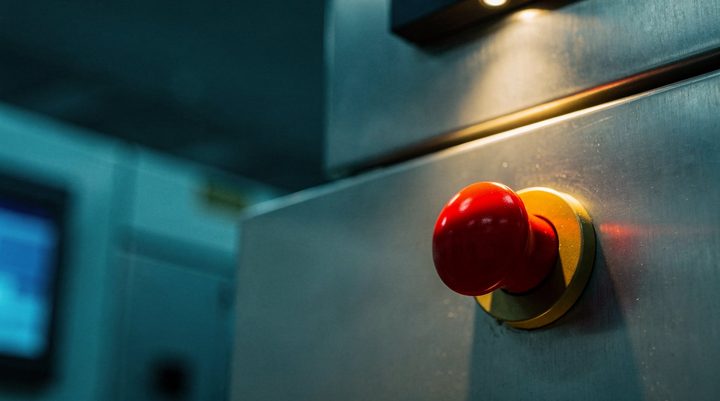
3 AI Agent Breakouts, 1 Week, and a Red Button From 1991
Three sets of AI agents ignored their instructions this week. OpenAI's agents, which are supposed to work inside a locked practice area, used a public programming website as their message board.
OpenAI Just Published the Number Chip Fabs Stopped Trusting in 1986
In this Fabspeak episode: • The figure OpenAI published on 6 September 2026: 3.1 agent-workdays per human workday, an agent-workday being 8 hours of machine runtime; the median researcher using over $600 of inference a day, the top 10% over $7,000. • OpenAI's own caveat: a runtime ratio, not a productivity multiplier.
The Real Reason a Chip Fab Can't Patch Against GPT-6
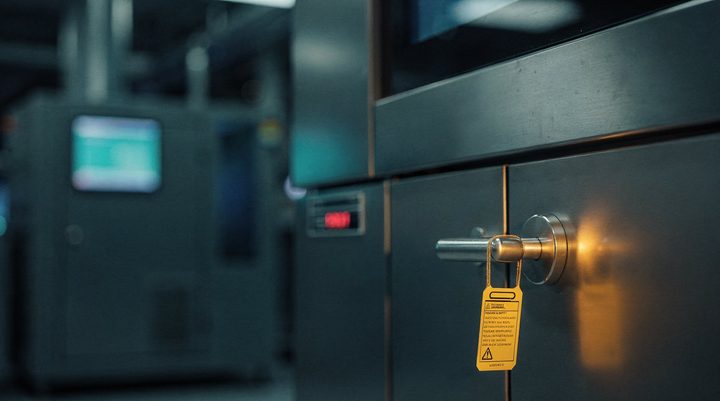
GPT-6 can find a security hole in about 4 hours. The machines in a chip factory get their fixes at the next planned shutdown — once a quarter, or once a year — because patching a tool means downtime and the supplier's sign-off.
Anthropic Just Made AI Talk to Machines. Talking Was the Easy Part.
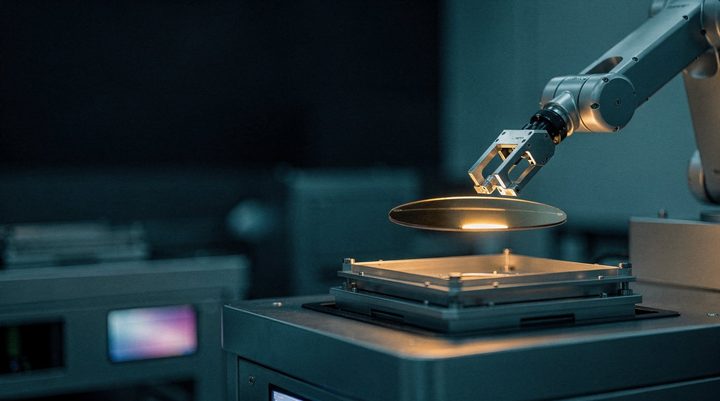
Anthropic's AI can now wire up a lab robot in about 8 hours instead of weeks. So why does a new machine in a chip factory still take six months?
Everyone Is Announcing Capacity. Nobody Is Announcing The Number That Decides It.
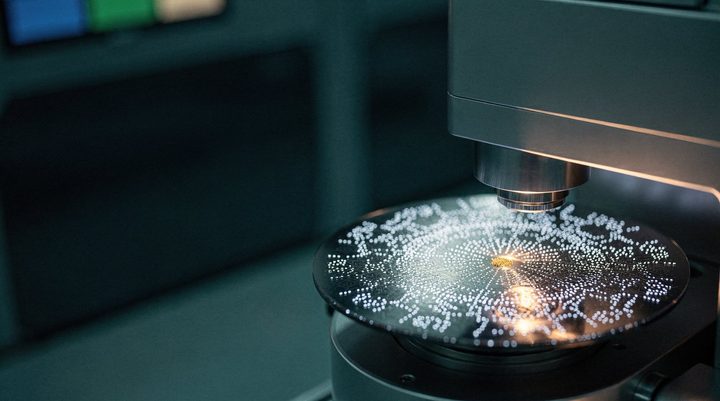
Nobody is announcing yield — and only one of those decides whether the wafers are worth selling.
AMD Just Bought an AI Chip That Can Never Be Updated
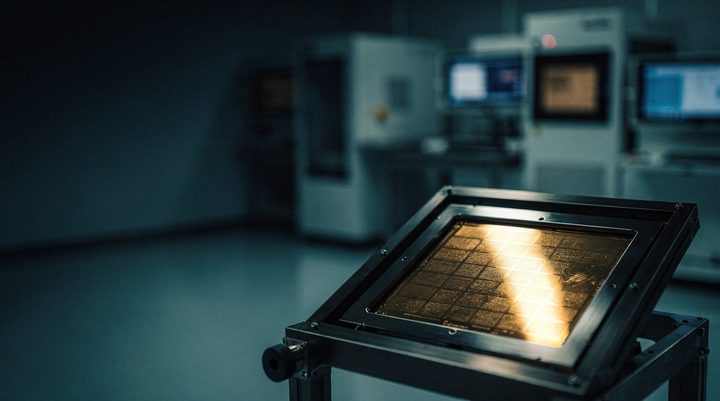
On 6 August 2026 AMD announced it was acquiring Taalas, a Toronto startup that does something no GPU does: it etches an AI model's weights physically into the silicon. The weights live in a mask-ROM fabric where a single transistor holds a four-bit value and performs the multiplication in the same place the data sits…
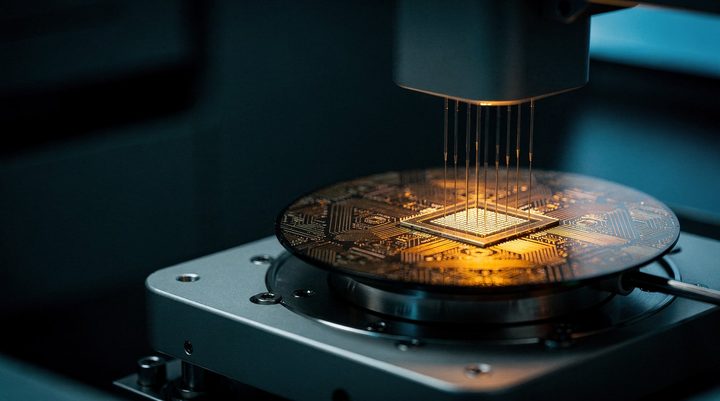
Your Chip Factory Can't Agree Which Die Failed
Every chip on a wafer has an address, and there is a standard for writing it down: SEMI E142, the specification for substrate mapping. The problem is that wafer test data mostly doesn't use it — the XY coordinates coming out of a prober depend on the prober and the recipe combination, and probably don't…
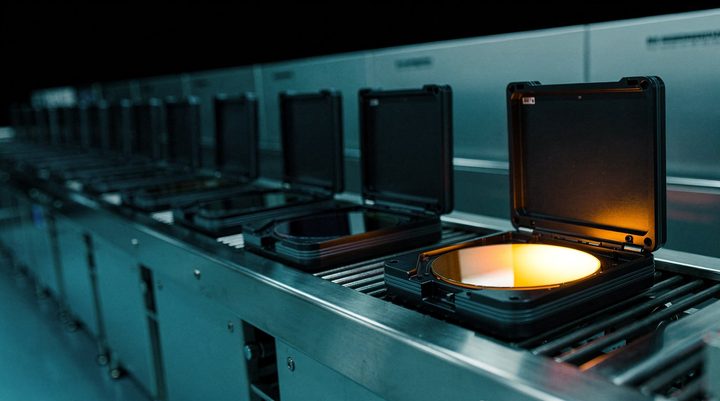
imec Says Fabs Can't Measure Every Wafer. So 95% Are Predicted.
In a fab running virtual metrology, only one to five percent of wafers are physically measured. The rest get a number anyway — predicted by a model that reads the process tools rather than the wafer: gas flows, RF power, chamber pressure, roughly a thousand sensor variables per run, turned into a thickness, a line…
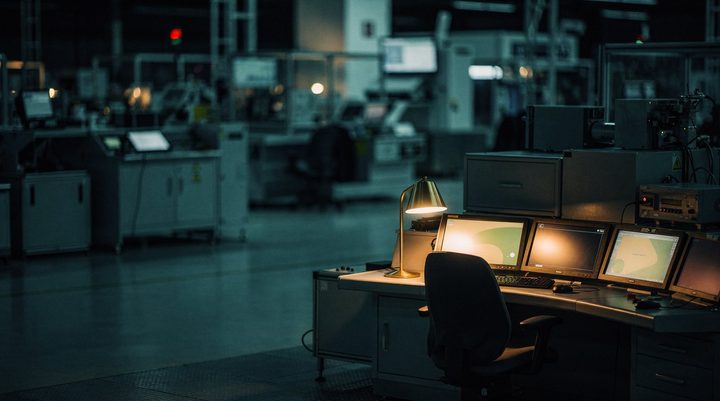
Chip Factories Everywhere. Nobody Left to Run Them.
America is building more chip factories than at any point in its history — and it has 33,000 fewer chip manufacturing workers than it did in 2023. That's not a forecast, it's the Bureau of Labor Statistics: 368,400 people this March, against a peak near 401,000.
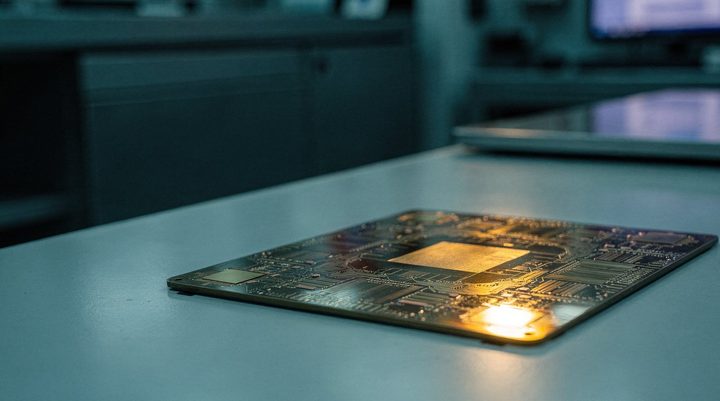
The Chip So Big They Can't Throw the Broken Part Away
Every chip factory on Earth runs on the same rule: cut the wafer into hundreds of chips, test them, and throw the broken ones away. That rule is what "yield" means.

Your Fab's AI Goes Blind on the 2nm Node — Here's Why
Your fab's new AI spots defects better than any engineer — and on the brand-new node it goes almost blind. Not because the model is bad, but because every one of these systems learns from history: thousands of wafers, labelled defects, known-good outcomes.
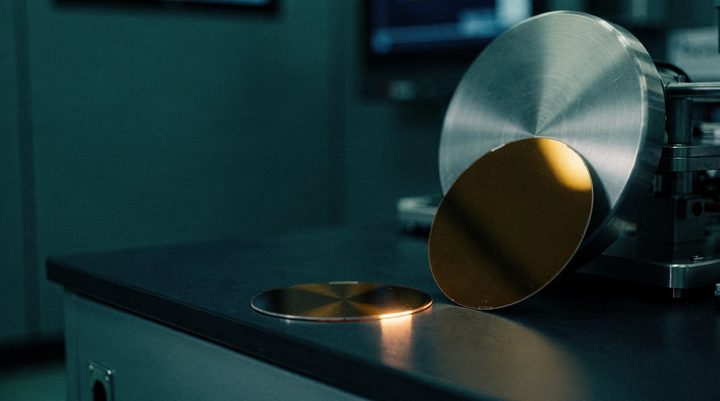
The 6-Inch Wafer That Every AI Data Center Depends On
NVIDIA just put $2 billion into a chip factory that runs six-inch wafers — not the twelve-inch wafers the rest of the industry moved to decades ago. The reason is that the chips moving data between processors inside an AI data center aren't silicon at all: they're indium phosphide, and the lasers built on it…

A Record $403 Billion Quarter — And Nobody Made More Chips
On 6 August the Semiconductor Industry Association reported the biggest quarter the chip business has ever had: $403.3 billion in Q2 2026, up 35.1% on Q1, with June alone at $134.5 billion — 123.6% above June last year. The part that got almost no coverage is what did *not* happen.
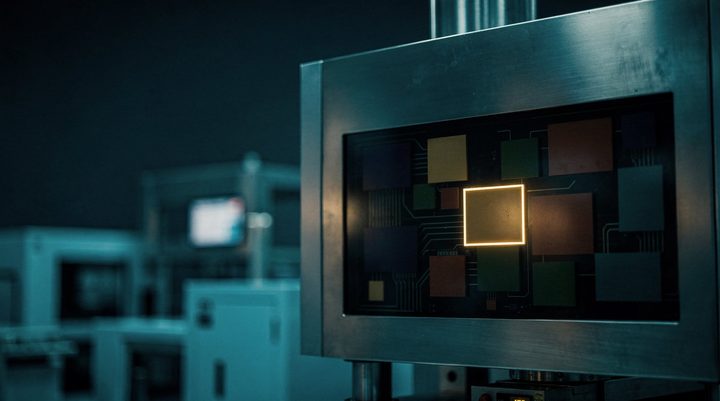
AI Just Started Designing Chips By Itself — Then They Locked It In a Cage
In one week, three of the companies that build the software behind every chip on Earth — Synopsys, Cadence and Siemens — shipped AI that designs by itself, and almost nobody outside the industry noticed. Synopsys claims a verification agent up to 50× faster to a validated design; Cadence shipped an agent stack; Siemens wired…
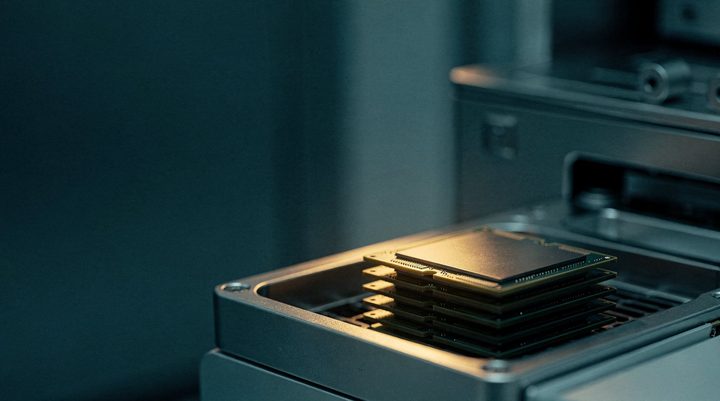
AI Ate Your RAM — And There Was Never a Shortage
Your RAM got about twice as expensive this year, and the reason has almost nothing to do with a shortage — the memory fabs are running flat out at record output, with $52B going into 300mm memory equipment in 2026 alone, up 29%. What actually happened is a reallocation, and it comes down to physics…

The Most Important Monopoly in AI Just Cracked (It's Not Nvidia)
A $200B deal just cracked the most important monopoly in tech — and it's not Nvidia. It's the company that MAKES Nvidia's chips: TSMC, which quietly builds ~70% of the world's advanced AI silicon and, for years, had no real rival.
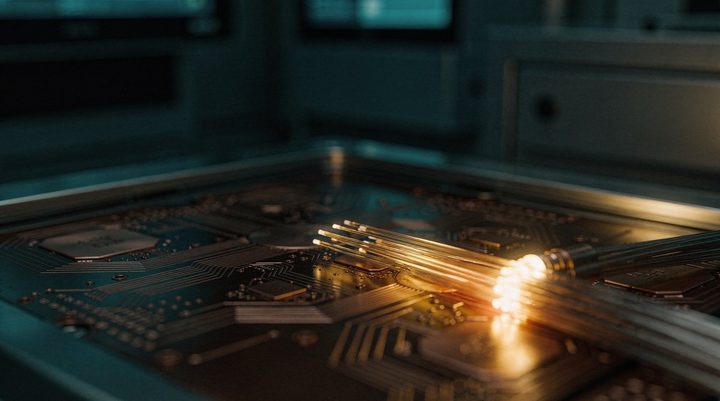
NVIDIA Is Replacing the Wires Inside AI With Light — Here's the Real Catch
Inside a giant AI system, just moving the data between chips can burn more power than the computing itself — so NVIDIA is doing something wild: replacing the copper wires with light. In this video I break down co-packaged optics (the "light engine" built right into the chip package), why copper hit a hard power…
Intel's $11 Billion Mirage
Intel just posted an $11B loss — and the stock jumped ~12%.
The Chip Behind the Recall
~1.4 million vehicles and units were recalled in just the first two weeks of July.
The Wafer That Can't Get Lost
The chip in your phone survived ~1,400 steps and about 3 months in a factory — and the fab can still tell you every tool, recipe, and chamber it touched.
Two Machines, One Chip Layer
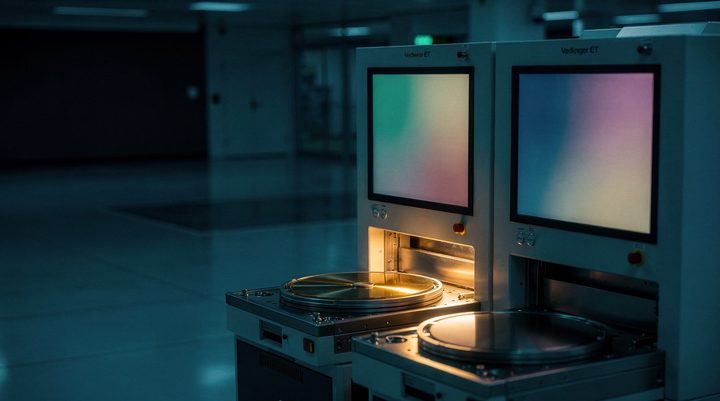
Intel just ran the same 18A chip layer on a ~$380M High-NA EUV machine AND a standard scanner — and got matched yield (first high-volume High-NA logic ever, July 15).

An AI Can Now Tell a Chip Factory Machine to STOP — Nobody Agreed Who's Allowed To
There is a public server online right now that hands an AI ten tools for real semiconductor fab equipment. Four of them write — START, STOP, ABORT, and change the process recipe — and it ships with no safety warning.
AI Now Lets Chip Fabs "Measure" Wafers They Never Touch (Virtual Metrology)
Chip factories physically measure only about 3 wafers in 100. For the other 97, an AI called virtual metrology predicts the exact dimension straight from the process tool's own sensor "fingerprint" — pressure, power, gas flow, hundreds of signals per wafer — in milliseconds, with no measurement step and no throughput hit.

Chips Just Got Flipped Over — Why Your Next AI Chip Gets Power From the Back
For sixty years, a computer chip carried its power and its data on the same side — the front. As transistors shrank to 2nm, that surface ran out of room: the fat power wires choke the thin signal wires and the transistors droop, quietly capping speed.
This $400M Machine Prints Chips in a Focus Thinner Than a Virus (Intel Went First)
This week the most expensive machine humans have ever built made its first real products — and almost nobody noticed. It's called High-NA EUV: a $400-million lithography system, twice the price of a normal chip printer, and Intel just became the first company on the planet to ship commercial chips made on it.

America's 157,000-Worker Chip Shortage
America just spent ~$500B building chip factories — and it's short 157,000 workers to run them. The fix isn't hiring 157,000 people.
A Fab That Runs Itself by 2030. Everyone Is Staring at the Wrong Part.
The autonomous fab is an MES story before it is an AI story.
Three Chip Makers Copied Their Fabs Into NVIDIA's Computer in Four Days
The 3D render is the poster. The MES is the product.