
NVIDIA Is Replacing the Wires Inside AI With Light — Here's the Real Catch
Your next AI chip won't talk in electricity. It'll talk in light.
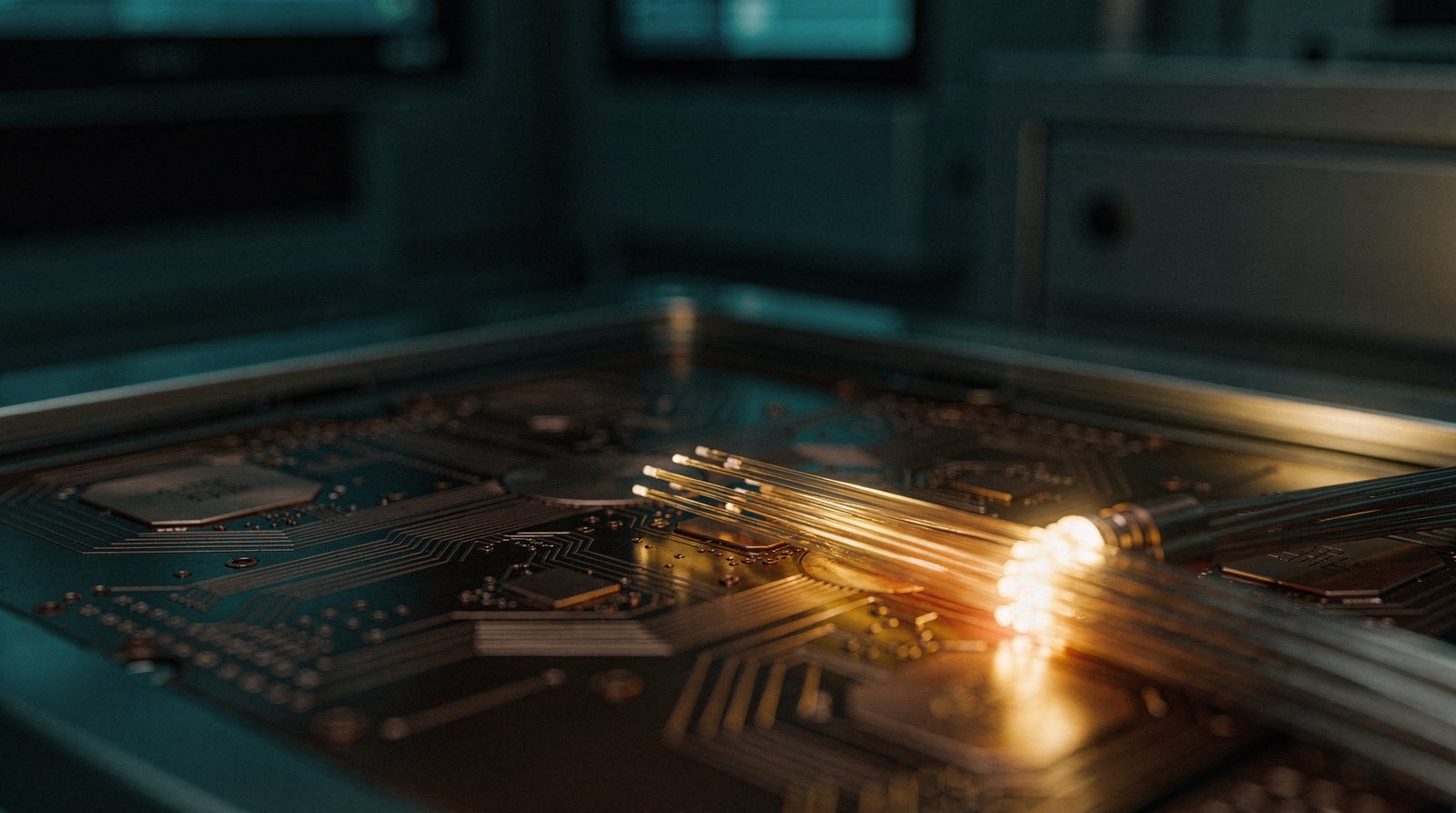
This one has not been published to the channel yet. Subscribe on YouTube and it will turn up there.
NVIDIA · CO-PACKAGED OPTICS
- Inside a giant AI system, just moving the data between chips can burn more power than the computing itself — so NVIDIA is doing something wild: replacing the copper wires with light.
- In this video I break down co-packaged optics (the "light engine" built right into the chip package), why copper hit a hard power wall, and NVIDIA's headline numbers — about 3.5× the power efficiency and 70% less interconnect power — that are being called the end of the copper era.
- The bottleneck didn't vanish — it walked out of the chip and into the package, and whoever masters optical-packaging yield owns the next decade of AI.
- Stay to the end for a 2-minute "hype filter" you can run on any breakthrough press release.
Why this matters
But here's the part the keynote skips: going optical doesn't delete the hard problem, it moves it. Suddenly you're aligning a glass fiber to a chip within a fraction of a hair's width, keeping a laser alive for years, and you can barely rework it — one bad align and the whole assembly is scrap. So this isn't really a physics win. It's a yield and packaging win.
Cut the hype on any "breakthrough" press release in 2 minutes: paste it into Claude, Copilot, or ChatGPT and ask it to mark each number PROVEN vs. marketing, then hand you the ONE question that would expose whether it's real. (On NVIDIA's photonics release it flagged the efficiency figures as vendor claims and asked "what's the laser failure rate at scale?")
- 0:00The wires now waste the power (the shock)
Which foundry masters optical-packaging yield first — TSMC, or a challenger?
Argue with me on LinkedInReferences for this piece are in the pinned comment on the video. Nothing is cited here that cannot be linked.
Full transcript, 392 spoken words
Keep reading
All pieces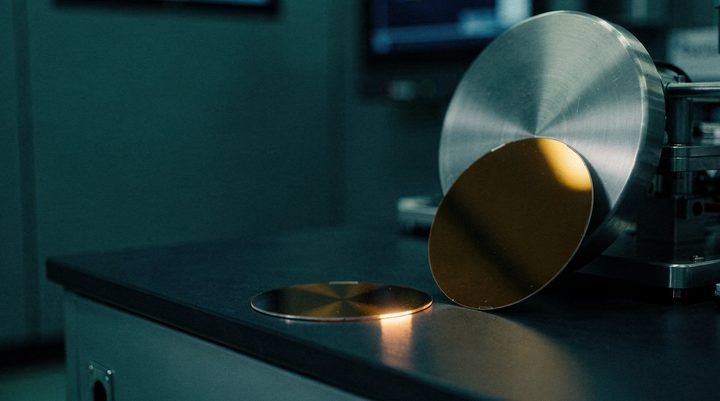
The 6-Inch Wafer That Every AI Data Center Depends On
NVIDIA just put $2 billion into a chip factory that runs six-inch wafers — not the twelve-inch wafers the rest of the industry moved to decades ago. The reason is that the chips moving data between processors inside an AI data center aren't silicon at all: they're indium phosphide, and the lasers built on it…
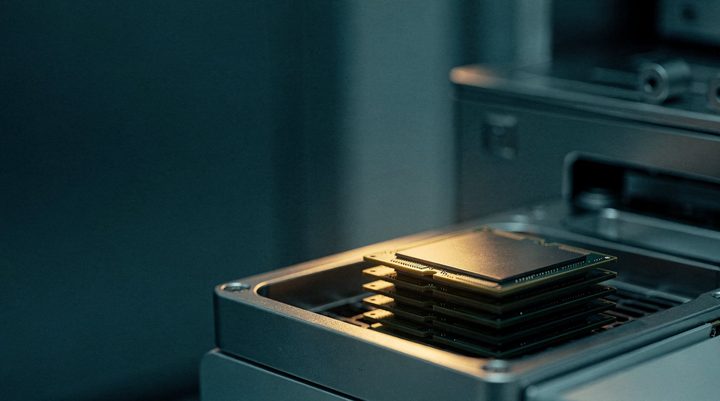
AI Ate Your RAM — And There Was Never a Shortage
Your RAM got about twice as expensive this year, and the reason has almost nothing to do with a shortage — the memory fabs are running flat out at record output, with $52B going into 300mm memory equipment in 2026 alone, up 29%. What actually happened is a reallocation, and it comes down to physics…

The Most Important Monopoly in AI Just Cracked (It's Not Nvidia)
A $200B deal just cracked the most important monopoly in tech — and it's not Nvidia. It's the company that MAKES Nvidia's chips: TSMC, which quietly builds ~70% of the world's advanced AI silicon and, for years, had no real rival.